
Shark Tank vs Y Combinator: Nipun Jain on Which One Your Startup Actually Needs
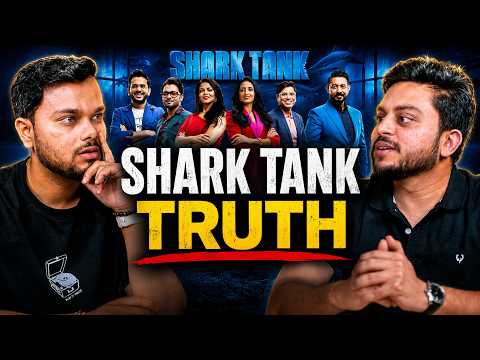
Two Brand Names, Two Very Different Games
Shark Tank and Y Combinator are two of the most aspirational names in the startup world today. Founders talk about "getting on Shark Tank" or "getting into YC" almost interchangeably, as markers of having made it.
But according to Nipun Jain, treating them as comparable options is a mistake. They serve fundamentally different kinds of founders, solving fundamentally different problems.
What Shark Tank Actually Gives You
Nipun is direct about where Shark Tank's real value lies, and it isn't primarily the funding.
Shark Tank deals typically range from roughly ₹50 lakh to ₹2 crore, in exchange for anywhere between 2% and 30% equity depending on the pitch.
The real prize, he argues, is visibility. A brand that a few thousand people knew about can be seen by millions overnight once it airs on national television.
Whether or not the deal on stage actually closes becomes secondary to the exposure itself.
If a shark does invest, founders get more than capital.
They get access to that shark's personal brand, their industry network, and often, as Nipun points out, help getting into major retail and distribution channels.
There's an important limitation here, though. Nipun is clear that Shark Tank works almost exclusively for B2C, consumer-facing brands, the kind whose target customer overlaps with the show's television audience.
For B2B or deep-tech businesses, he says, the platform simply isn't built for that audience.
What Y Combinator Actually Gives You
Y Combinator operates on an entirely different scale and philosophy.
Typical YC checks range from $100K to $250K, for roughly 5% to 20% equity, with a commonly cited standard structure of about 7% for $500K.
But the number that stands out most is the acceptance rate: out of many thousands of applications each batch, only around 1% get in. Selected founders go through an intensive three-month program, often relocating to the US, working closely with YC partners on taking their idea from zero to one.
Nipun points to a track record that speaks for itself: Razorpay, Cleartax and Meesho are all YC alumni, alongside some of the biggest tech companies in the world.
YC is built for founders with hardcore, tech-first, highly scalable ideas, businesses with the potential, at least in theory, to become billion-dollar companies.
The Network Effect
One of Y Combinator's most underrated advantages, according to Nipun, is what happens after the funding.
YC companies actively support and network with each other in a way he compares directly to an IIT or IIM alumni system, a built-in support structure that keeps compounding in value long after the program ends.
Choosing the Right Platform
Nipun's larger point is simple: neither platform is inherently better, they're built for different founders solving different problems. A consumer brand chasing visibility and distribution has good reason to consider Shark Tank.
A deep-tech founder building something genuinely scalable is better served looking at Y Combinator.
Either way, he's clear that neither platform is a shortcut. Investors and accelerators can accelerate growth, open doors, and lend credibility, but they cannot substitute for a strong product.
As Nipun puts it, if the product itself isn't good, nothing else will make a business survive in the market.
Watch the full Conversation-
More from the blog



Subscribe to our newsletter
The best new roles, resources and must-watch episodes — in your inbox every week. No spam, unsubscribe anytime.